Lacto-Fermented Fruit: 2% Salinity Guide for Plums, Berries & Apples
⚖️ Calculate 2.0% Salt for Fruit Batches
Fruit preservation requires exact gram ratios to prevent alcoholic fermentation. Use our interactive calculator to compute exact salt grams based on total fruit weight:
Open Fermentation Calculator →When most people think of preserving seasonal fruit, they imagine sugary jams, fruit brandies, or dehydrating fruit into leather. But in traditional Nordic and Japanese culinary heritage—popularized globally by Copenhagen's restaurant Noma—fruit undergoes a startling transformation through lactic acid fermentation.
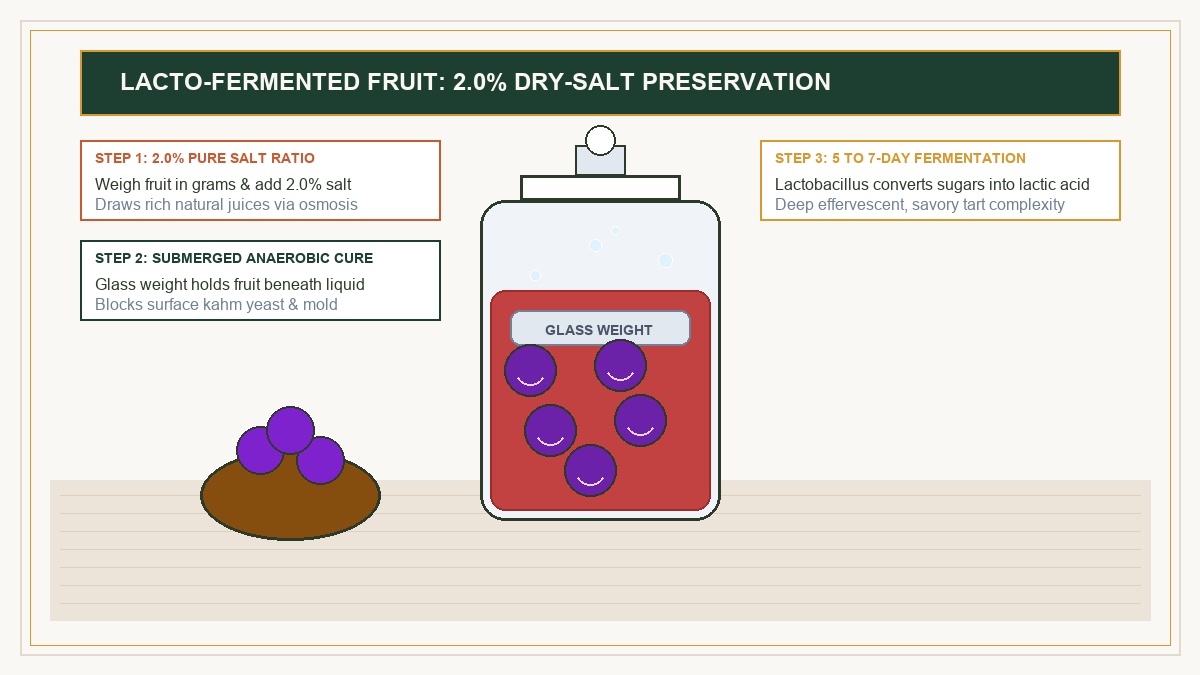
By tossing fresh plums, berries, or apples in exactly 2.0% pure salt by weight and sealing them in an anaerobic environment, you suppress wild alcohol-producing yeasts. Instead, native lactic acid bacteria (Lactobacillus plantarum) consume the fruit's natural fructose, transforming sweet fruit into an intensely savory, floral, tart, and carbonated culinary powerhouse.
Lactic Bacteria vs. Wild Yeast: The 2.0% Salinity Threshold
The chemical dilemma of fermenting fruit is its high sugar concentration. When fruit skin is bruised at room temperature, wild airborne yeasts (Saccharomyces cerevisiae) naturally race to ferment those sugars into alcohol and carbon dioxide (the genesis of wild cider or wine).
Sodium chloride ($NaCl$) serves as our biological traffic cop:
| Salinity % (by weight) | Microbial Dominance | Primary Byproduct | Culinary Outcome |
|---|---|---|---|
| 0.0% to 0.8% | Wild Yeasts & Mold | Ethanol & Acetic Acid | Alcoholic cider or spoiled vinegary mash |
| 1.8% to 2.2% (Sweet Spot) | Lactic Acid Bacteria | Lactic Acid + CO2 | Effervescent, tangy, floral umami fruit |
| 3.5%+ (Excess Salt) | Extreme Halophiles | High Saline Preservation | Inedible, salty fruit; inhibits fruit lacto enzymes |
At 2.0% salinity, wild yeasts are paralyzed. Lactic acid bacteria, which thrive in moderate salt, multiply exponentially. Over 5 to 7 days, they drop the pH of the fruit to roughly 3.6 to 3.8, creating a self-preserving, botulism-proof acidic fortress while preserving the cellular integrity of the fruit.
The Best Fruits for Lacto-Fermentation
Not every fruit performs equally in a salt fermentation. High-pectin, firm-fleshed fruits produce the cleanest texture:
- Stone Fruits (Plums, Damson Plums, Peaches, Apricots): The gold standard! Halved and pitted plums release rich purple juices that create a natural brine. The flesh remains firm and toothsome while developing notes of Japanese umeboshi.
- Berries (Blueberries, Blackberries, Cranberries): Whole wild blueberries and blackberries ferment exceptionally well. Their thick skins prevent mushiness. After 5 days, they pop in your mouth like tiny carbonated flavor spheres.
- Crisp Apples & Asian Pears: Diced crisp apples (such as Honeycrisp or Granny Smith) maintain crunch. Their malic acid pairs harmoniously with newly created lactic acid.
- Fruits to Avoid: Avoid ultra-soft, delicate berries (like ripe raspberries or strawberries), which dissolve into an unappealing gray slurry within 48 hours. Citrus fruits (lemons, limes) are better suited to high-salt lacto-brines.
Step-by-Step Production Protocol
- Clean and Halve Fruit: Wash fruit under cool water and pat dry. For stone fruits (plums, peaches), slice along the seam, twist apart, and discard the central pit. Leave skin intact.
- Compute Exact 2.0% Salt Weight: Place your clean mixing bowl on a digital gram scale and tare to zero. Add the prepped fruit. Multiply the gram weight by 0.02 (for example, 800g of halved plums requires exactly 16g of pure non-iodized fine sea salt).
- Gentle Massage: Sprinkle salt over the fruit and fold gently with clean hands. Within 15 minutes, the salt draws clear, syrupy fruit juice from the cells via osmosis.
- Pack and Weight: Transfer fruit and all juices into a clean glass fermentation jar. Press down gently. Place a heavy glass fermentation puck on top so that all fruit pieces are fully submerged beneath their own extracted juice.
- Fit Airlock: Seal with a silicone valve or water-channel lid to let CO2 gas escape while barring oxygen. Rest at room temperature (68°F–72°F) away from direct sun.
- Day 5 Taste Test: By day 4 or 5, you will observe tiny bubbles effervescing up the sides of the jar. Sample one piece with a clean fork. It should taste refreshingly tart, slightly salty, and effervescent. Transfer to refrigerator to halt the ferment.
Frequently Asked Questions (People Also Ask)
Can I vacuum seal the fruit instead of using a mason jar?
Yes! In professional culinary kitchens, vacuum seal bags are the preferred method for lacto-fermented fruit. Toss the fruit in 2% salt, seal in a food vacuum bag on medium vacuum, and leave on the counter. The bag will inflate like a balloon as CO2 gas is produced. When tight like a pillow (day 5 to 7), snip open and refrigerate.
How long does lacto-fermented fruit last in the refrigerator?
Kept submerged under its brine in a sealed jar at 38°F (3°C), lacto-fermented fruit will maintain excellent quality for 4 to 6 months. The cold temperature slows bacterial metabolism to a near standstill.
What should I do with the leftover fermented fruit brine?
Never pour the brine down the drain! Fermented fruit brine is a culinary goldmine. Use it as a live probiotic salad vinegar, whisk into olive oil for vinaigrettes, use it to glaze roasted poultry, or splash into sparkling seltzer water for a refreshing botanical shrub.