Lacto-Fermented Gherkins: Crisp Cornichons & Salinity Guide
⚖️ Calculate 3.5% Gherkin Salinity
Crisp cucumbers require higher salinity than sauerkraut. Use our precision calculator to compute exact grams of non-iodized salt for your water brine volume:
Open Fermentation Calculator →There is no culinary disappointment quite like biting into a fermented pickle and having it squish softly in your mouth like a waterlogged sponge. Commercial factory pickles bypass this problem by pasteurizing cucumbers in boiling distilled vinegar and dosing them with chemical crisping agents like aluminum sulfate (alum) or calcium chloride.
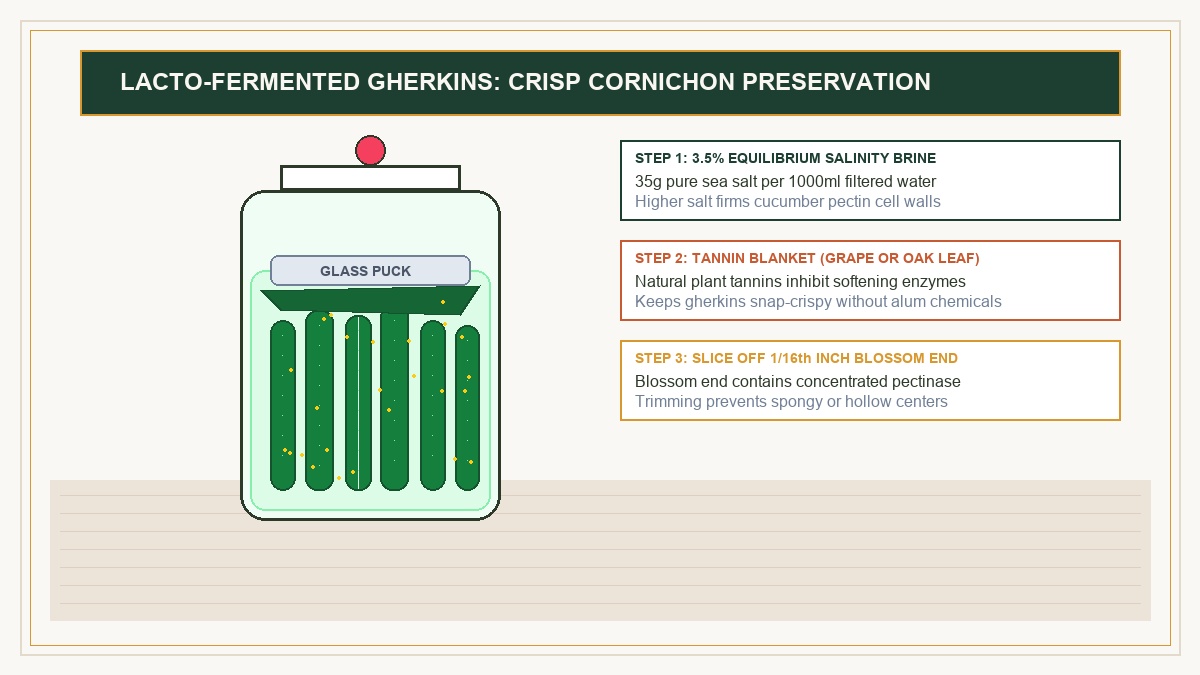
In traditional heritage preservation, we achieve that explosive, audible "snap" using pure biological and botanical methods. By combining young miniature gherkins with a firming 3.5% equilibrium salinity, trimming the blossom end to eliminate softening enzymes, and tucking in a blanket of tannin-rich grape leaves, you can produce artisan cornichons that remain crunchy for an entire year.
The Science of Softness: The Pectinase Enzyme
Why do cucumbers turn to mush while cabbage ferments into crisp sauerkraut? The culprit is an enzyme called pectinase (polygalacturonase). Pectinase enzymes naturally dissolve the pectin glue that holds plant cell walls together, allowing cucumbers to soften and rot in the field so seeds can disperse.
To stop pectinase dead in its tracks, professional fermenters apply three defensive barriers:
| Crisp Defense Layer | Mechanism | Culinary Action |
|---|---|---|
| 1. Blossom End Trimming | Physical Removal of Enzymes | Slice off 1/16th inch from blossom end (where pectinase is concentrated) |
| 2. Tannin Blanketing | Enzyme Denaturation | Add grape, oak, or horseradish leaves; polyphenols bind and deactivate pectinase |
| 3. Elevated 3.5% Salinity | Pectin Wall Hardening | Sodium and calcium ions strengthen cellular walls against enzymatic breakdown |
Why 3.5% Salinity Is the Golden Standard
When fermenting sauerkraut or lacto-fermented fruit, a 2.0% salt concentration is standard. But cucumbers are composed of 96% water. In a low-salt 2% environment, water floods the cell vacuoles via osmotic pressure, causing cell walls to burst and creating hollow, spongy pickles.
At 3.5% salinity (35 grams of salt per 1000ml of water), the osmotic gradient is gently balanced. Water is drawn out just enough to keep the cucumber flesh dense and toothsome, while providing an inhospitable barrier against spoilage molds and softening yeasts.
The Traditional Botanical Spice Blend
A true artisan gherkin is defined by its pungent, herbal brine infusion. Pack the following into the base of each 1-quart wide-mouth jar:
- Fresh Flowering Dill Heads (or Dill Seeds): 2 heads or 1 tsp seeds. Essential carvedilol aromatics.
- Yellow & Brown Mustard Seeds: 1.5 teaspoons. Mustard seeds contain sinigrin, which releases sharp, wasabi-like isothiocyanates that inhibit surface Kahm yeast.
- Whole Black Peppercorns & Coriander Seeds: 1 teaspoon each, lightly cracked with a mortar and pestle.
- Whole Garlic Cloves (Peeled & Smashed): 4 to 5 cloves. Infuses pungent allicin throughout the brine.
- Fresh Grape, Oak, or Horseradish Leaf: 1 large leaf placed on top to trap floaters and infuse hydrolyzable tannins.
Step-by-Step Fermentation Schedule
- The Ice Water Turgor Soak: Submerge your fresh-picked gherkins in an ice-water bath for 30 to 45 minutes before trimming. This recharges the cucumbers' turgor pressure, plumping the cell walls with moisture.
- Trim the Blossom Ends: Inspect each cucumber. The stem end has a clean indentation; the blossom end has a small rough brown dot. Slice off 1/16th of an inch from the blossom end and discard.
- Vertical Packing: Pack the gherkins upright as tightly as possible into a sterilized glass jar over your spices. Tightly packed gherkins wedged against one another prevent loose cucumbers from floating up to the surface.
- Pour 3.5% Brine & Apply Weight: Dissolve 35g non-iodized sea salt in 1 liter of cool filtered water. Pour over the gherkins. Lay a fresh grape leaf over the cucumbers, and crown with a sanitized heavy glass puck weight.
- The 5-to-7 Day Fermentation Window: Fit with an airlock. Store in a cool, dark corner at 65°F to 68°F (18°C–20°C). Avoid hot rooms (75°F+), which accelerate bacterial fermentation too rapidly and soften flesh.
- Cold Storage Transition: On day 5, sample a gherkin. It should possess a sharp, tangy bite, an olive-green hue throughout its flesh, and an audible snap when bitten. Transfer to the refrigerator immediately. The cold temperature halts lactic acid production, locking in that exact texture for 12 months.
Frequently Asked Questions (People Also Ask)
Can I use standard English or slicing cucumbers for gherkins?
No. Standard supermarket slicing cucumbers (like English hothouse cucumbers) have thin, water-bloated flesh and huge internal seed chambers. They will dissolve into a hollow, mushy mush within 3 days. Always use dedicated pickling varieties (such as Kirby, National Pickling, or Boston Pickling) picked when small and firm.
What causes hollow cavities inside fermented pickles?
Hollow pickles (hollow heart) are caused by two things: cucumbers that suffered drought stress in the garden before picking, or fermentation in too low a salinity where gas-producing yeasts outpaced lactic bacteria. Soaking cucumbers in ice water and maintaining a strict 3.5% salinity eliminates hollow centers.
Is it safe to eat if white film forms on top of the brine?
A thin, chalky white film on top of the brine is typically Kahm yeast, an aerobic wild yeast that thrives in oxygen contact. It is completely non-toxic and harmless. Simply skim it off with a clean spoon. Using a water-channel crock or airtight silicone airlock prevents Kahm yeast from forming.