Pastrami Brine Recipe: Corned Beef to Smoked Deli Masterclass
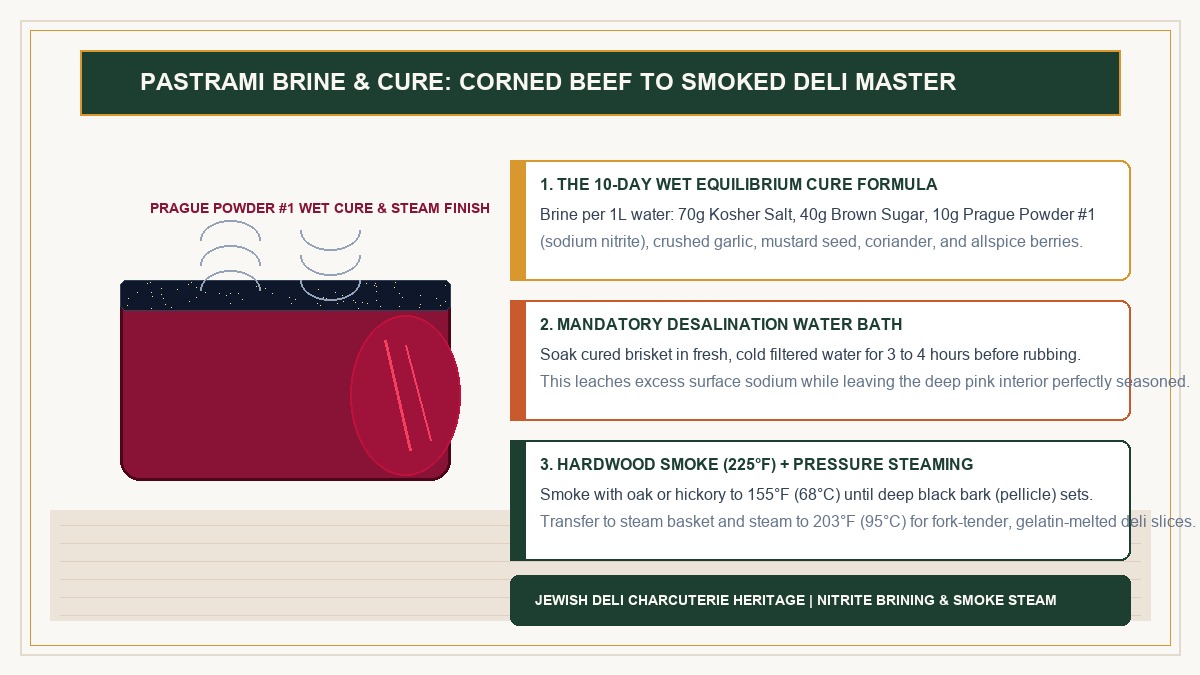
Stepping into an authentic Jewish deli—from the crowded counters of Katz's in Manhattan to Schwartz's in Montreal—the air is thick with the intoxicating perfume of hardwood smoke, toasted coriander, black pepper, and steaming beef fat. Hot pastrami, carved by hand in thick, translucent, rosy-pink slabs and piled high between slices of seeded caraway rye bread, is widely considered the crowning jewel of North American charcuterie.
Yet, many backyard pitmasters believe pastrami simply means throwing a store-bought pre-packaged corned beef brisket onto a smoker. While that shortcut can yield decent results, true artisan pastrami is made from raw beef brisket from scratch. By controlling the brine salinity, regulating Prague Powder #1 nitrite levels, executing a mandatory desalination soak, and utilizing the classic smoke-and-steam two-stage cook, you can achieve legendary deli-counter perfection at home.
The Lineage: Corned Beef vs. Pastrami vs. Montreal Smoked Meat
Pastrami traces its roots to Romanian Jewish immigrants who adapted the Ottoman preservation technique of pastirma to beef brisket in New York City during the late 19th century. Understanding how it compares to related cured beef traditions clarifies the process:
| Delicacy | Curing Method | Seasoning Profile | Cooking & Finishing |
|---|---|---|---|
| Corned Beef | Wet brine (salt, sugar, Cure #1, allspice) | Mild pickling spice, bay leaf, garlic | Simmered in water/pot until tender; sliced cold or hot |
| NY Artisan Pastrami | Wet equilibrium brine + desalination soak | Heavy cracked coriander & tellicherry pepper crust | Hot-smoked to 155°F → Steamed to 203°F (95°C) |
| Montreal Smoked Meat | Dry cure rub (salt, Cure #1, heavy pepper) | Peppery, coriander, mustard, garlic | Smoked over maple/oak → Steamed for 3 hours |
If you have already cured standard corned beef using our corned beef and pastrami brine guide, you know the power of aromatic pickling spices. Pastrami elevates that base through the magic of Maillard bark and steam tenderization.
The Master Pastrami Wet Brine Formula
Because pastrami is cooked and hot-smoked (never aged raw for months like bresaola), it requires Prague Powder #1 (sodium nitrite, 6.25%). This formula is calibrated per 2,000ml (2 liters) of water, sufficient to cure a 4-to-6 pound trimmed brisket flat or point:
📐 Master Pastrami Brine (per 2 Liters Water):
- Cold Filtered Water: 2,000g / 2 Liters (100%)
- Diamond Crystal Kosher Salt: 140g (7.0% salinity — or 105g Morton)
- Dark Brown Sugar: 80g (4.0% — balances salt, feeds color development)
- Prague Powder #1: 20g (provides safe ~175 PPM sodium nitrite in aqueous solution)
- Whole Coriander Seeds: 1.5 tablespoons (toasted and cracked)
- Whole Black Peppercorns: 1.5 tablespoons (cracked)
- Whole Mustard Seeds: 1 tablespoon
- Whole Allspice Berries: 1 teaspoon
- Whole Cloves: 5 cloves
- Dried Bay Leaves: 3 leaves (crushed)
- Fresh Garlic: 6 large cloves (crushed)
*Review our USDA nitrite PPM safety guide or calculate larger briskets with the curing salt calculator.
The Critical Secret: The Desalination Soak
Ask any experienced pitmaster why their first homemade pastrami was inedible, and they will give you the same answer: "It was so salty it burned my mouth."
When beef sits in brine for 7 to 10 days, salt migrates deep into the core via Fickian diffusion. However, salt concentration on the outer 1/4-inch rim remains very high. If you apply a pepper rub and smoke it for 6 hours, surface moisture evaporates, concentrating that outer salt into a harsh sodium crust. To prevent this, you must execute a cold water desalination soak: remove the brisket from the brine, submerge it in a large container of pure cold filtered water for 3 to 4 hours (changing the water once). This leaches excess surface sodium back into the water while keeping the interior perfectly seasoned.
Step-by-Step Smoke & Steam Protocol
- Trim the Brisket: Trim excess hard deckle fat from your brisket point or flat, leaving a clean, uniform 1/4-inch white fat cap. Prick surface lightly with a meat needle or skewer to assist brine penetration.
- Boil & Chill Brine: Simmer spices, salt, sugar, and Prague Powder #1 in 500ml of water for 5 minutes. Combine with 1,500ml of ice water. Chill below 38°F (3°C).
- The 7-to-10 Day Refrigerator Cure: Submerge brisket in chilled brine inside a food-grade brining container or vacuum bag. Keep refrigerated at 36°F–38°F for 7 to 10 days, flipping every 2 days.
- Desalinate: Remove brisket. Submerge in cold, fresh water for 3 to 4 hours. Drain and pat bone-dry.
- Apply the Legendary Rub: Coarsely grind equal parts whole coriander seeds and tellicherry black peppercorns (approx 3 tablespoons each), along with 1 tablespoon granulated garlic and 1 teaspoon smoked paprika. Press firmly into every square inch of the meat to build a heavy, uniform crust. Rest uncovered on a wire rack in the refrigerator for 8 to 12 hours to dry the bark.
- Stage 1 - The Hardwood Smoke: Fire your smoker to 225°F (107°C) using oak, hickory, or cherry wood. Smoke the brisket uncovered until the internal temperature reaches 150°F to 155°F (65°C–68°C) and the peppery crust is set and dark mahogany (typically 4 to 5 hours).
- Stage 2 - The Deli Steam Finish: Place an elevated metal steaming rack inside a large roasting pan or stockpot with 2 inches of boiling water. Rest the smoked pastrami on the rack, ensuring it does not touch the liquid. Cover with an airtight foil lid. Steam on the stovetop or inside a 275°F oven for 2.5 to 3.5 hours until an instant-read probe slides into the thickest section with zero resistance, reading 203°F (95°C).
- Carve Across the Grain: Transfer hot pastrami to a cutting board. Let rest for 15 minutes. Using an ultra-sharp slicing knife, slice across the muscle grain into warm, luscious, buttery 1/8-inch slices.
Frequently Asked Questions (People Also Ask)
Can I make pastrami out of a store-bought corned beef?
Yes! If you are short on time, you can buy a packaged corned beef brisket. However, store-bought corned beef is packed with high-saline commercial brines; you must soak it in cold fresh water for 8 to 12 hours (changing the water 2 to 3 times) to pull out excess sodium before applying the coriander-pepper rub and smoking.
Can I slice pastrami cold?
While pastrami can be chilled and sliced paper-thin for cold deli platters, authentic New York pastrami is meant to be served steaming hot. High-collagen brisket fat coagulates and firms when cold; gentle steam melts this fat into liquid silk, giving pastrami its signature melt-in-your-mouth tenderness. If you have leftovers, steam them over water rather than microwaving.
Why is coriander the dominant spice in pastrami?
Coriander (the dried seed of the cilantro plant) contains linalool, a terpene that delivers bright, floral, citrusy, and woody notes. When cracked coarsely and paired with the sharp piperine pungency of tellicherry black pepper, coriander creates a flavor bridge that cuts through the intense richness of fatty cured beef.
How long does homemade pastrami keep?
Cooked pastrami will keep wrapped tightly in the refrigerator for up to 7 to 10 days. For long-term preservation, portion the pastrami into half-pound slabs, vacuum seal, and freeze for up to 6 months. To reheat frozen pastrami, place the sealed vacuum bag directly into a 160°F (71°C) water bath (sous vide) for 1 hour for fresh-from-the-steam-table flavor!
Explore More Master Meat Curing & Charcuterie:
From whole-muscle dry curing to smoked deli classics, master the math behind traditional charcuterie:
- Visit the comprehensive Meat Curing & Charcuterie Pillar Hub.
- Master whole-muscle beef drying with our Homemade Bresaola Guide.
- Explore Italian pork belly curing with our Homemade Pancetta Protocol.